


Learning Resource Center

Welcome!

Your one-stop, no-cost library for building stronger recovery housing and support programs — courses, guides, webinars, podcasts, NAADAC CE opportunities, research, and more.

Whether you’re opening your first recovery home, leading an established program, working as a peer or recovery support provider, or a community partner, there’s something here for you.

ExploreLearnGrow
A key with a house keyring in a front door
One hiker helping another up to a mountaintop
Learning Center Support
Publications & Papers

Sex Trafficking Among Recovering People in Rural Areas

A whitepaper on the overlap between sex trafficking and substance use disorder, and what recovery support organizations can do about it. Explains how traffickers exploit dependency and why people in recovery are prime targets and remain at risk of re-exploitation. Sets out the red flags to watch for, then turns practical: staff and volunteer training, tips for a trauma-informed conversation with a survivor, policies and visitation procedures for a recovery residence, how to educate residents without labeling them, and where to turn.
Publications & Papers

Assessing Technical Assistance Needs among Recovery Residence Operators in the United States

A national survey of recovery residence owners and operators on where they most need technical assistance and training.

Newsletter

December 2024: Peer-driven Social Model of Recovery and The History of the Healing Place

The story of The Healing Place in Louisville — the peer-driven model that inspired Recovery Kentucky and then the Fletcher Group — and a tribute to its founder Jay Davidson.

Infographic

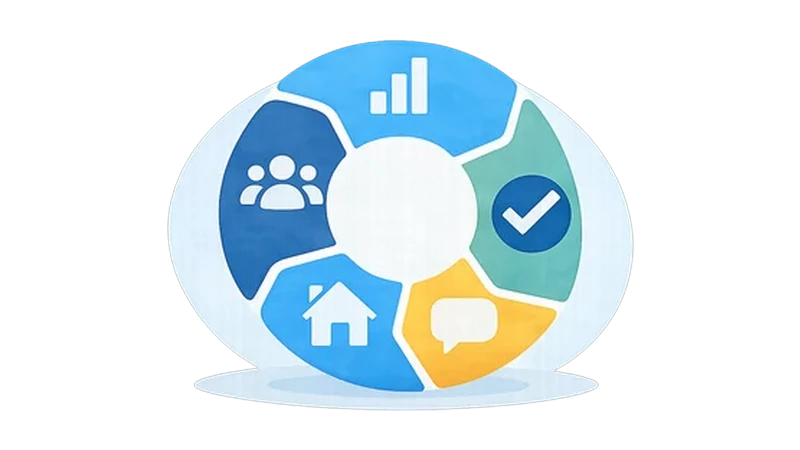
Components of a Recovery Ecosystem

A one-page map exploring six components that build a recovery ecosystem

Newsletter

September 2023: What Can Recovery Allies Do?

Recovery Allies author Alison Webb on recovery capital in its personal, social and community forms, and the actions allies can take — marking Recovery Month and the 60 million Americans in recovery.

Infographic

The Peer-Led Social Model: A Recovery Ecosystem

A one-page diagram of the peer-led social model, tracing how referral sources connect people to a recovery home's supports — peer support, case management, life skills, stable housing and more — to build recovery capital.

Newsletter

August 2026: The Science of Recovery: How the Brain Heals

Explore the science of recovery and how substance use affects the brain’s reward, stress, decision-making, learning, and memory systems. This newsletter examines the brain’s healing process through different stages of recovery and offers practical strategies recovery housing providers can use to create safe, supportive environments that promote healing, regulation, and long-term recovery.

Newsletter

September 2026: Understand and Overcome Recovery House Financial Challenges

Explore the financial and housing challenges affecting the sustainability of recovery residences and the research identifying strategies to address them. Highlighting barriers to stable recovery housing, the importance of diversified funding, strong business practices, and how research is being translated into practical tools and approaches to strengthen long-term recovery housing sustainability.

Newsletter

July 2026: Understand How Co-Occurring Disorders May Be Affecting Your Residents and Clients

Co-occurring disorder expert Geoff Wilson on dual diagnosis — how common it is, the barriers that keep it untreated, and what works best in rural communities.

Newsletter

March 2026: Identify Trauma and Provide Clients with Appropriate Trauma-Informed Care

Cecily McMillan, author of The Scars of the Chosen, on trauma as an inside job, why our hardest habits are survival strategies, and a three-part resiliency toolkit.

Newsletter

October 2025: Everything You Need to Know about Deflection, Including Challenges Unique to Rural Areas

Treatment Alternatives for Safer Communities (TASC)’s Jac Charlier, Guy Farina, and Sydney Goggins on deflection — the six pathways that route people to treatment instead of arrest, the rural obstacles, and how to start a program.

Newsletter

February 2026: Latest Withdrawal Management Tools and Techniques

Three non-pharmaceutical withdrawal management tools — AcuDetox acupuncture, biofeedback training and neuro-electrode treatment — and why none of them stands alone.

Showing 12 of 206 resources
Load More

In Partnership With

Interested in Partnering or Have an Idea to Share?
Get in Touch!

Fletcher Group is a RCORP Rural Center of Excellence in Substance Use Disorder Recovery

www.hrsa.org

The Learning Center is supported by the Health Resources and Services Administration (HRSA) of the U.S. Department of Health and Human Services (HHS) as part of an award totaling $3.3 million, with 0% financed with non-governmental sources. The contents are those of the author(s) and do not necessarily represent the official views of, nor an endorsement, by HRSA, HHS, or the U.S. Government.